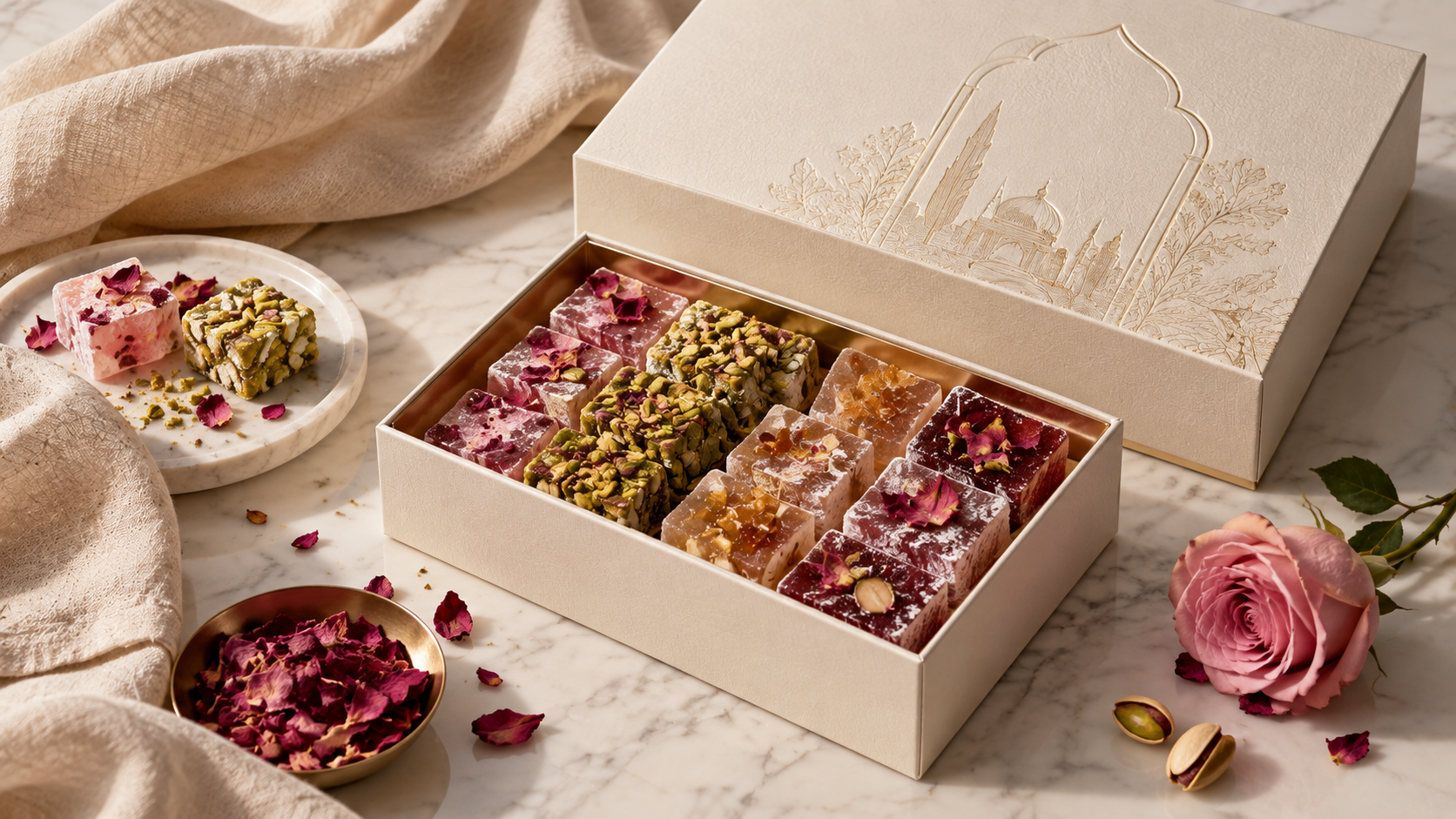
Unsolicited work. This market study was produced independently by PUOI Studio. We have no affiliation with Koska. All analysis and strategy are speculative — this is how we think.
The Opportunity
Every Dutch child knows the phrase "Turks fruit." Almost none of them have ever tasted real lokum.
The Product
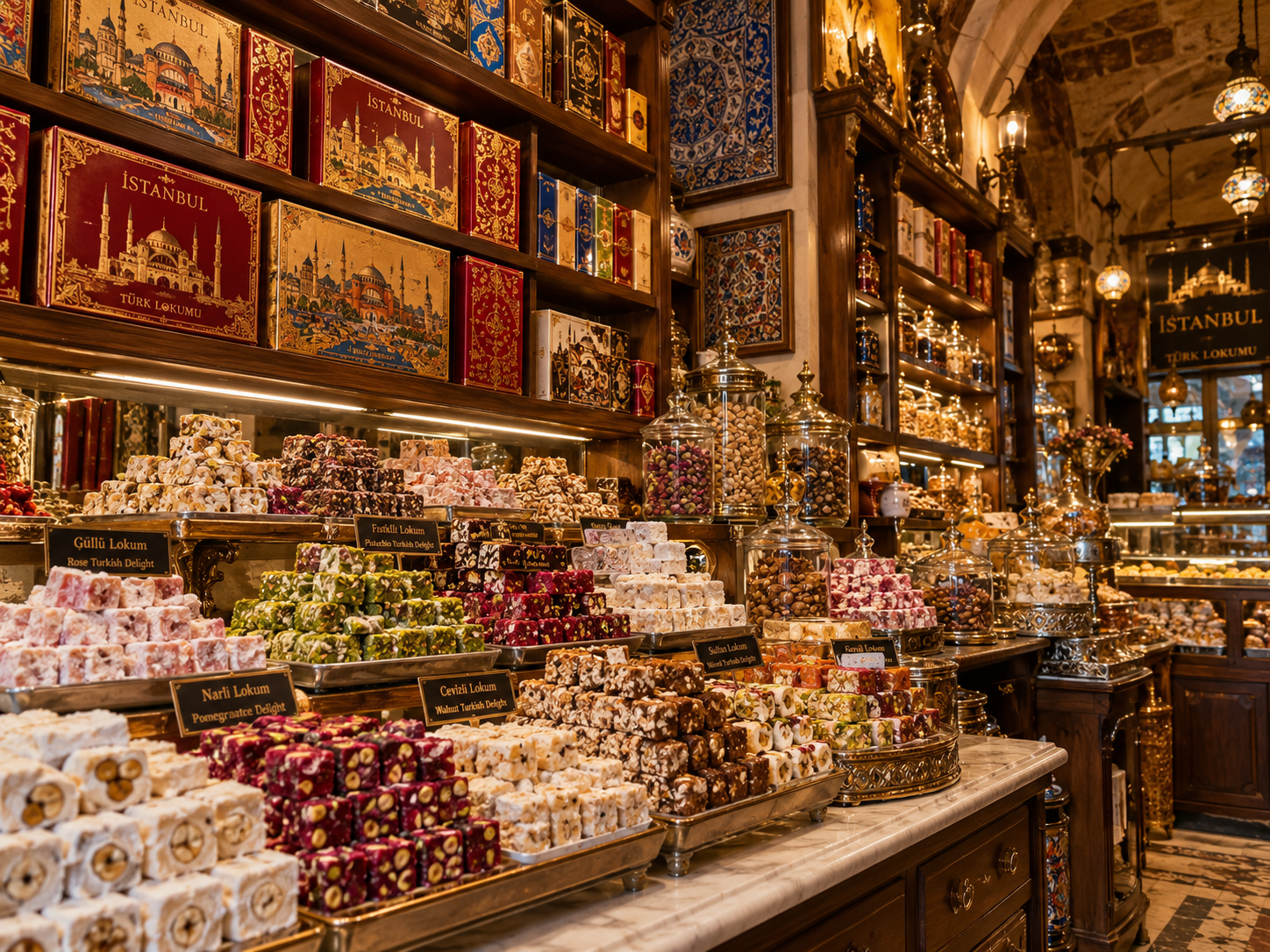
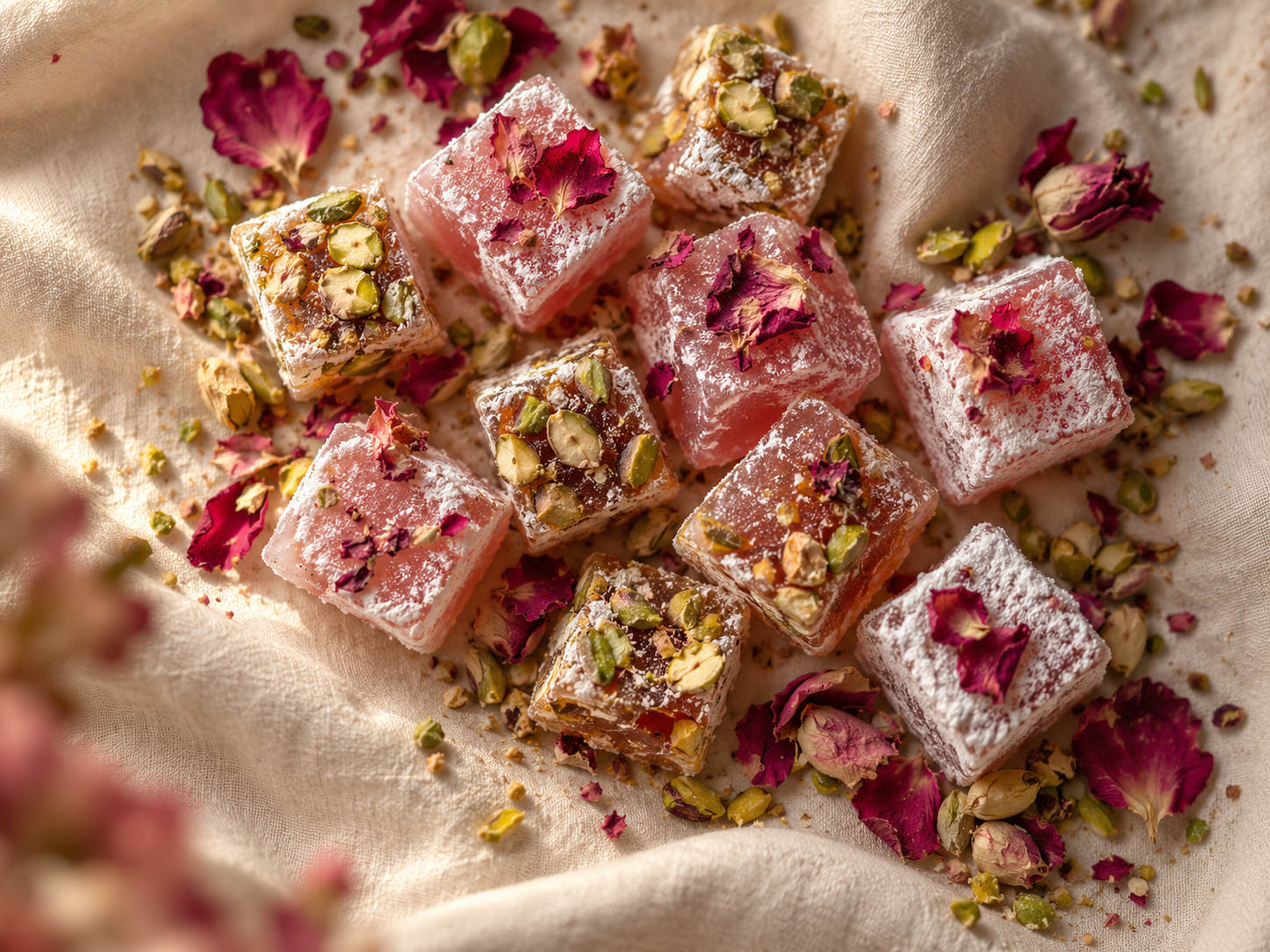
The product is already this good.
Rose. Pistachio. Double-roasted. Koska's lokum is made to a recipe that hasn't changed in generations. The quality is not the problem. The gap is entirely about presentation, positioning, and access.
Premium lokum sells for €25–40 per box in Turkish specialty stores. Belgian chocolate at the same price point in Dutch supermarkets has far lower product quality.
The Challenge
The packaging is doing the wrong job.
Koska's packaging is designed beautifully — for a Turkish consumer who already knows the brand. Gold, ornate, dense. It signals tradition and trust in Istanbul. Next to Scandinavian design and clean-label packaging in a Dutch specialty store, it reads as unfamiliar import-store goods.
Meanwhile, the Dutch version of "Turks fruit" — made by local brands using gelatin and synthetic rose flavouring — has trained millions of Dutch consumers to associate the concept with cheap supermarket candy.
The authentic product is invisible. The cultural association is diluted. The gap between what Koska makes and what Dutch consumers experience is the market opportunity.
Key Findings
"Turks fruit" is the entry point — and the problem
Dutch consumers have a deep nostalgic association with the phrase. The opportunity is to reclaim the original: be the authentic version of something Dutch people already love. Not "try something foreign." But "this is what Turks fruit actually is."
The packaging is doing the wrong job
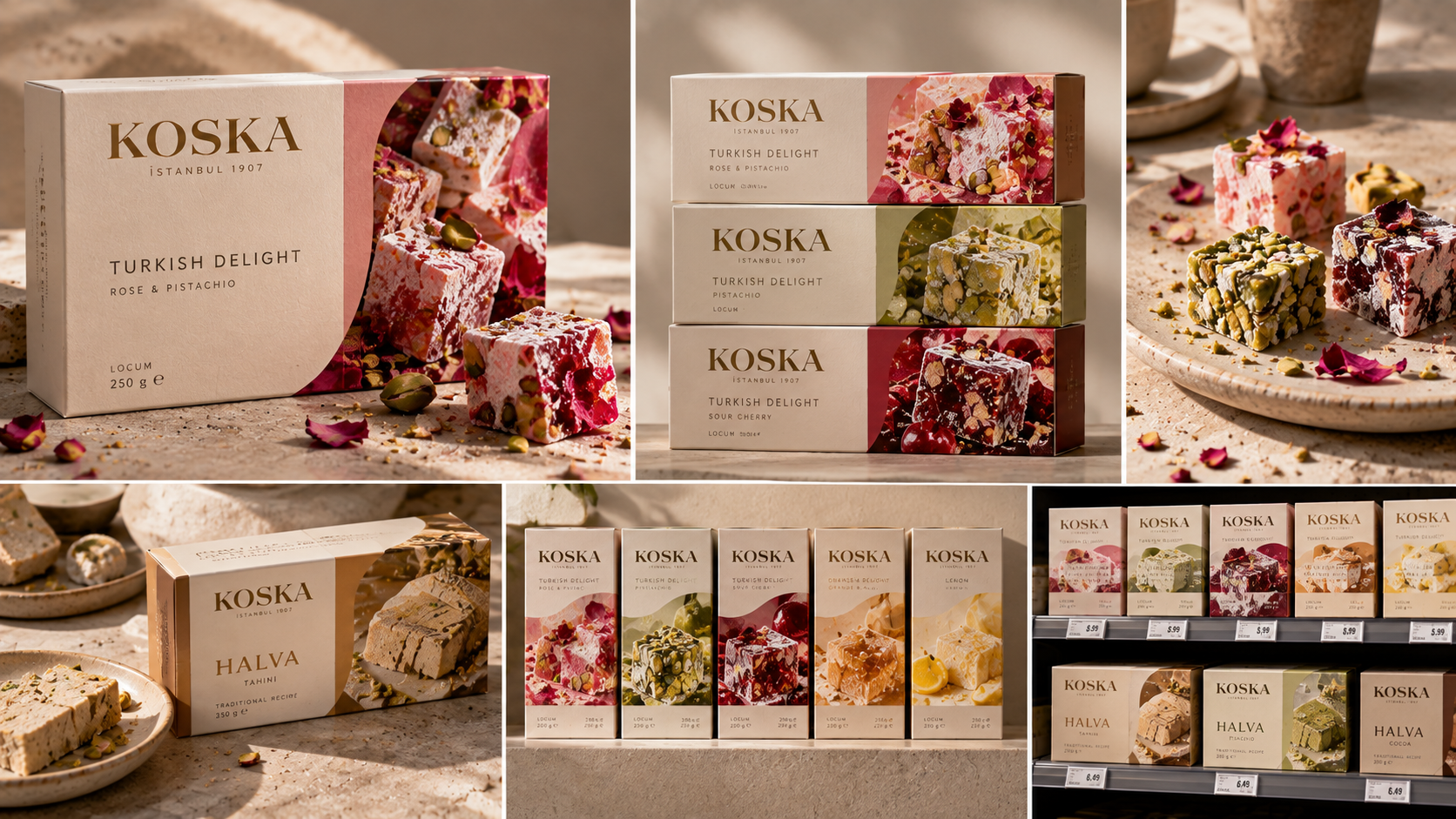
Same heritage, different language. The product inside deserves a different wrapper for a different audience. European packaging: minimal, bilingual, "Istanbul, 1907" front and centre. Not a rebranding — a reframing.
Helva is the sleeper product
Sesame-based, high in protein, naturally sweetened. It maps onto trends Dutch consumers already follow: tahini bowls, sesame snacks, clean-label treats. The same consumer who buys tahini would buy helva — if positioned correctly.
The gift market is underserved
Belgian chocolate and French sweets at €25–40 in Dutch gift shops have far lower product quality than Koska’s lokum. A beautifully packaged Koska gift box for Sinterklaas, birthdays, and corporate gifting could command those margins today.
The Strategy
A three-phase entry. Each phase funds and validates the next.
Methods